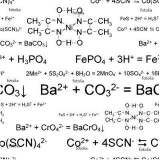
How do you know if a chemical
equation is balanced? What can you change to balance an equation? Play a
game to test your ideas!
Primary aims of the lab:
Online labs provide students with the possibility to conduct scientific experiments in an online environment. Remotely-operated labs (remote labs) offer an opportunity to experiment with real equipment from remote locations. Virtual labs simulate the scientific equipment. Data sets present data from already performed lab experiments. Please use the filters on the right to find appropriate online labs for your class.
Please note that the Go-Lab Authoring Platform Graasp is no longer maintained. This means that it is not possible to create and publish new Go-Lab Inquiry Learning Spaces using the labs listed on this page. However, you can still access the labs and use them directly on the providers' websites with help of the preview links, which you will find on the dedicated lab pages. If you are interested in creating and using Inquiry Learning Spaces in your classroom, please visit the new Authoring Platform Graasp.org
If you are looking for online labs selected for the curricula of Benin, Kenya or Nigeria, please visit our Collections page.

This applet is used to explore the
relationship between the isotopic ratios of an element and the element's
atomic weight. Select any atomic element and manipulate its isotope
ratios using the provided pie chart or table.
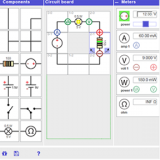
In the Electrical Circuit Lab
students can create their own electrical circuits and do measurements on
it. In the circuits the students can use resistors, light bulbs,
switches, capacitors and coils. The circuits can be powered by a AC/DC
power supply or batteries.
Bond (from bonding in chemistry)
helps students learn about solubility and precipitation of salts. Bond
contains a database with thousands of salts and the most common ions,
with information about solubility and colours. The setup is similar to
what students would do in a real chemistry lab.
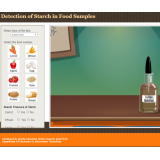
Conduct the Iodine test with
different food items to test for the presence of starch.
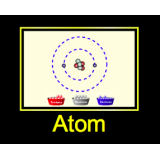
Build an atom out of protons,
neutrons, and electrons, and see how the element, charge, and mass
change. Then play a game to test your ideas!
There are two similar labs that you
can see if you create a space, feel free to choose which one to use.
Please note that while the preview shows you only one, the screenshots
present both labs.
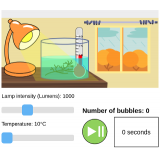
This lab is an abridged Html5 version
of the Flash-based Photolab. It has been optimized to work with tablet
computers.
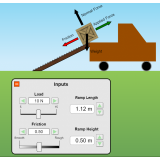
This simulation visualizes forces and
work involved in moving a block along an inclined plane. Students can
explore this phenomenon varying the ramp and the block characteristics.
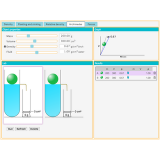
In Splash students can create objects
from object properties like mass, volume, and density, and drop these
objects in a tube filled with a fluid.