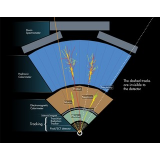
Students will use the experimental data collected by the ATLAS experiment at CERN to “discover” invisible particles and calculate their mass. For this purpose they will identify different lepton types and use Einstein’s famous equation for the equivalence of mass and energy.
Subject Domains
- Astronomical Objects And Their Characteristics
- Astronomy Related Sciences And Fields Of Study
- Effect And Phenomena
- Humans In Space
- Terms And Concepts
- Anatomy
- Botany
- Ecology
- Humans And Animals
- Life Processes
- Variation, Inheritance And Evolution
- Analytical Chemistry
- Chemical Reactions
- Inorganic Chemistry
- Organic Chemistry
- Physical Chemistry
- Aerospace Engineering
- Civil Engineering
- Electrical Engineering
- Mechanical Engineering
- Production Engineering
- Transport Engineering
- Climate
- Energy
- Environment
- Environmental Protection
- Natural Resources
- Earth Science
- Geography
- Algebra And Number Theory
- Analysis
- Applied Mathematics
- Differential And Difference Equation
- Geometry
- Logic And Foundations
- Numbers And Computation
- Statistics And Probability
- Topic From Subjects
- Electricity And Magnetism
- Energy
- Fields
- Forces And Motion
- High Energy Physics
- History Of Science And Technology
- Light
- Radioactivity
- Solids, Liquids And Gases
- Sound
- Technological Applications
- Tools For Science
- Useful Materials And Products
- Waves
- Computer Science And Technology
- Construction - Architecture
- Design
- Electricity - Electronics
- Industry
- Internet
- Mechanics
- Production
Astronomy
Biology
Chemistry
Engineering
Environmental Education
Geography And Earth Science
Mathematics
Physics
Technology
Big Ideas Of Science
- Energy Transformation
- Fundamental Forces
- Our Universe
- Structure Of Matter
- Microcosm (Quantum)
- Evolution And Biodiversity
- Organisms And Life Forms
- Planet Earth
Age Ranges
- Before 7
- 7-8
- 9-10
- 11-12
- 13-14
- 15-16
- Above 16
Languages
- Arabic
- Basque
- Bulgarian
- Catalan
- Croatian
- Czech
- Danish
- Dutch
- English
- Estonian
- Finnish
- French
- Galician
- Georgian
- German
- Greek
- Hungarian
- Indonesian
- Irish
- Italian
- Latvian
- Lithuanian
- Macedonian Slavic
- Polish
- Portuguese
- Romanian
- Russian
- Serbian
- Simplified Chinese
- Slovak
- Spanish
- Swedish
- Traditional Chinese
- Turkish
- Ukrainian
Apply
Reset
Inquiry Learning Spaces (ILSs) are personalized learning resources for students, including a lab, apps, and any other type of multimedia material. ILSs follow an inquiry cycle. Inquiry cycles can differ but the basic Go-Lab cycle consists of the phases Orientation, Conceptualisation, Investigation, Conclusion, and Discussion. The aim of an ILS is to provide students with an opportunity to conduct scientific experiments, being guided through the inquiry process and supported at each step.
This page presents ILSs created by teachers or the Go-Lab and/or Next-Lab team (and often in co-creation), on a large set of domains and in many languages. Please note that the Go-Lab Authoring Platform Graasp is no longer maintained. This means that it is not possible to create and publish new Go-Lab ILSs, preview or copy ILSs listed on this page. It is only possible to view the descriptions of ILSs, which were created and published during the lifetime of the Go-Lab projects. This page can be used for your information only. If you are interested in creating and using Inquiry Learning Spaces in your classroom, please visit the new Authoring Platform Graasp.org
If you are looking for Inquiry Learning Spaces created especially for the curricula of Benin, Kenya or Nigeria, please visit our Collections page.
Above 16
Sort by


Use, invention and analysis of binary codes. The activity includes comprehensive home assignment.
Ο Ήλιος είναι το αστέρι που βρίσκεται πιο κοντά στη Γη μας. Είναι η πηγή της ζωής για τον πλανήτη μας. Σε αυτή τη δραστηριότητα θα μετρήσουμε πειραματικά την ενεργό του θερμοκρασία.
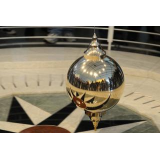
Students will observe the movement a virtual Foucault's pendulum in order to witness the Earth's rotation. Students will also learn about circular motion and angular velocity.
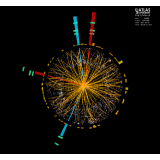
In this activity students have the chance to test the conservation of momentum in particle collisions.
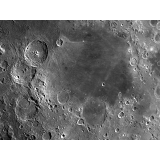
In this exercise students use the Impact Calculator lab to investigate what happens when a comet it hits the Earth. Through the investigation students get acquainted with the gravitational potential energy while they also practice with using mathematical formulas and making graphs.
Σε αυτήν την άσκηση οι μαθητές θα χρησιμοποιήσουν εξ'αποστάσεως έναν ανιχνευτή Geiger-Muller προκειμένου να μελετήσουν την απορρόφηση της ραδιενέργειας σε συνάρτηση με το χρόνο έκθεσης, την απόσταση από τη πηγή και την ύπαρξη απορροφητών.
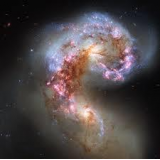
In this activity students investigate the different shapes of galaxies and their origin. They observe images taken from telescopes which depict interacting galaxies and in sequence they use the “Galaxy Crash” simulation in order to simulate the creation of these galaxies.
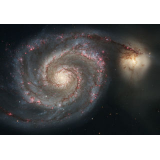
This activity aims to introduce to students the concept of varying galactic morphologies.