Aurkeztutako ingurumenari buruzko ILSak inpaktu sozioekonomiko inklusiboaren ikuspegia erabiltzen du. Jarduera honetan, pertsonen elikadura ohiturei erreparatzen diegu, eta ohitura horiek klima aldaketan nola eragiten duten aztertzen dugu.
Subject Domains
- Astronomical Objects And Their Characteristics
- Astronomy Related Sciences And Fields Of Study
- Effect And Phenomena
- Humans In Space
- Terms And Concepts
- Anatomy
- Botany
- Ecology
- Humans And Animals
- Life Processes
- Variation, Inheritance And Evolution
- Analytical Chemistry
- Chemical Reactions
- Inorganic Chemistry
- Organic Chemistry
- Physical Chemistry
- Aerospace Engineering
- Civil Engineering
- Electrical Engineering
- Mechanical Engineering
- Production Engineering
- Transport Engineering
- Climate
- Energy
- Environment
- Environmental Protection
- Natural Resources
- Earth Science
- Geography
- Algebra And Number Theory
- Analysis
- Applied Mathematics
- Differential And Difference Equation
- Geometry
- Logic And Foundations
- Numbers And Computation
- Statistics And Probability
- Topic From Subjects
- Electricity And Magnetism
- Energy
- Fields
- Forces And Motion
- High Energy Physics
- History Of Science And Technology
- Light
- Radioactivity
- Solids, Liquids And Gases
- Sound
- Technological Applications
- Tools For Science
- Useful Materials And Products
- Waves
- Computer Science And Technology
- Construction - Architecture
- Design
- Electricity - Electronics
- Industry
- Internet
- Mechanics
- Production
Astronomy
Biology
Chemistry
Engineering
Environmental Education
Geography And Earth Science
Mathematics
Physics
Technology
Big Ideas Of Science
- Energy Transformation
- Fundamental Forces
- Our Universe
- Structure Of Matter
- Microcosm (Quantum)
- Evolution And Biodiversity
- Organisms And Life Forms
- Planet Earth
Age Ranges
- Before 7
- 7-8
- 9-10
- 11-12
- 13-14
- 15-16
- Above 16
Languages
- Arabic
- Basque
- Bulgarian
- Catalan
- Croatian
- Czech
- Danish
- Dutch
- English
- Estonian
- Finnish
- French
- Galician
- Georgian
- German
- Greek
- Hungarian
- Indonesian
- Irish
- Italian
- Latvian
- Lithuanian
- Macedonian Slavic
- Polish
- Portuguese
- Romanian
- Russian
- Serbian
- Simplified Chinese
- Slovak
- Spanish
- Swedish
- Traditional Chinese
- Turkish
- Ukrainian
Apply
Reset
Inquiry Learning Spaces (ILSs) are personalized learning resources for students, including a lab, apps, and any other type of multimedia material. ILSs follow an inquiry cycle. Inquiry cycles can differ but the basic Go-Lab cycle consists of the phases Orientation, Conceptualisation, Investigation, Conclusion, and Discussion. The aim of an ILS is to provide students with an opportunity to conduct scientific experiments, being guided through the inquiry process and supported at each step.
This page presents ILSs created by teachers or the Go-Lab and/or Next-Lab team (and often in co-creation), on a large set of domains and in many languages. Please note that the Go-Lab Authoring Platform Graasp is no longer maintained. This means that it is not possible to create and publish new Go-Lab ILSs, preview or copy ILSs listed on this page. It is only possible to view the descriptions of ILSs, which were created and published during the lifetime of the Go-Lab projects. This page can be used for your information only. If you are interested in creating and using Inquiry Learning Spaces in your classroom, please visit the new Authoring Platform Graasp.org
If you are looking for Inquiry Learning Spaces created especially for the curricula of Benin, Kenya or Nigeria, please visit our Collections page.
Energy Transformation
Sort by
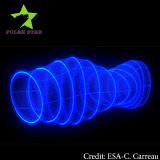
Ανιχνεύσιμα βαρυτικά κύματα, μπορούν να δημιουργηθούν από πολύ μεγάλης μάζας σώματα όπως οι μελανές οπές και οι αστέρες νετρονίων τα οποία περιστρέφονται το ένα γύρω από το άλλο.
Αυτό το περιβαλλοντικό μάθημα σχεδιάστηκε με βάση την εκπαιδευτική προσέγγιση του Ανοικτού Σχολείου. Οι μαθητές μαθαίνουν για τις βασικές πηγές ενέργειας και αναλογίζονται τις συνέπειες των μη-ανανεώσιμων πηγών ενέργειας.
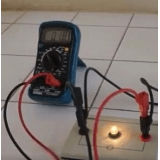
Cet ILS permet aux élève en classe de troisième de mieux comprendre le cours sur la résistance électrique. De bien comprendre la loi d'OHM et de la vérifiée expérimentalement.
Este ILS medioambiental inclusiva fue diseñada aplicando el enfoque de impacto científico.
Este ILS ambiental emprega a abordagem de impacto socioeconómico inclusivo. Nesta atividade, colocamos nosso foco nos hábitos alimentares das pessoas e como esses hábitos contribuem para as Alterações Climáticas.
Las ondas gravitacionales detectables pueden ser creadas por objetos compactos masivos (como agujeros negros o estrellas de neutrones) que orbitan entre sí. ¿Cómo podemos modelar esto con materiales cotidianos?
Este ILS ambiental apresentado foi projetado implementando a abordagem científica. Nesta atividade, os alunos aprendem sobre a ciência por trás do Efeito Estufa e como diferentes moléculas interagem com a radiação eletromagnética.
Como utilizamos o espaço para nos observarmos? O que é que as medições do clima e da meteorologia nos dizem sobre a Terra e o nosso ambiente?