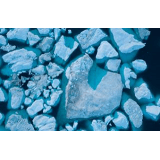
Lód może przybierać różne formy: od płatków śniegu, przez kostki lodu, po lód morski i lód lodowcowy. Uczniowie dowiedzą się, jak bardzo lód morski różni się od lodu lodowcowego i jakie są konsekwencje topnienia lodu.
Subject Domains
- Astronomical Objects And Their Characteristics
- Astronomy Related Sciences And Fields Of Study
- Effect And Phenomena
- Humans In Space
- Terms And Concepts
- Anatomy
- Botany
- Ecology
- Humans And Animals
- Life Processes
- Variation, Inheritance And Evolution
- Analytical Chemistry
- Chemical Reactions
- Inorganic Chemistry
- Organic Chemistry
- Physical Chemistry
- Aerospace Engineering
- Civil Engineering
- Electrical Engineering
- Mechanical Engineering
- Production Engineering
- Transport Engineering
- Climate
- Energy
- Environment
- Environmental Protection
- Natural Resources
- Earth Science
- Geography
- Algebra And Number Theory
- Analysis
- Applied Mathematics
- Differential And Difference Equation
- Geometry
- Logic And Foundations
- Numbers And Computation
- Statistics And Probability
- Topic From Subjects
- Electricity And Magnetism
- Energy
- Fields
- Forces And Motion
- High Energy Physics
- History Of Science And Technology
- Light
- Radioactivity
- Solids, Liquids And Gases
- Sound
- Technological Applications
- Tools For Science
- Useful Materials And Products
- Waves
- Computer Science And Technology
- Construction - Architecture
- Design
- Electricity - Electronics
- Industry
- Internet
- Mechanics
- Production
Astronomy
Biology
Chemistry
Engineering
Environmental Education
Geography And Earth Science
Mathematics
Physics
Technology
Big Ideas Of Science
- Energy Transformation
- Fundamental Forces
- Our Universe
- Structure Of Matter
- Microcosm (Quantum)
- Evolution And Biodiversity
- Organisms And Life Forms
- Planet Earth
Age Ranges
- Before 7
- 7-8
- 9-10
- 11-12
- 13-14
- 15-16
- Above 16
Languages
- Arabic
- Basque
- Bulgarian
- Catalan
- Croatian
- Czech
- Danish
- Dutch
- English
- Estonian
- Finnish
- French
- Galician
- Georgian
- German
- Greek
- Hungarian
- Indonesian
- Irish
- Italian
- Latvian
- Lithuanian
- Macedonian Slavic
- Polish
- Portuguese
- Romanian
- Russian
- Serbian
- Simplified Chinese
- Slovak
- Spanish
- Swedish
- Traditional Chinese
- Turkish
- Ukrainian
Apply
Reset
Inquiry Learning Spaces (ILSs) are personalized learning resources for students, including a lab, apps, and any other type of multimedia material. ILSs follow an inquiry cycle. Inquiry cycles can differ but the basic Go-Lab cycle consists of the phases Orientation, Conceptualisation, Investigation, Conclusion, and Discussion. The aim of an ILS is to provide students with an opportunity to conduct scientific experiments, being guided through the inquiry process and supported at each step.
This page presents ILSs created by teachers or the Go-Lab and/or Next-Lab team (and often in co-creation), on a large set of domains and in many languages. Please note that the Go-Lab Authoring Platform Graasp is no longer maintained. This means that it is not possible to create and publish new Go-Lab ILSs, preview or copy ILSs listed on this page. It is only possible to view the descriptions of ILSs, which were created and published during the lifetime of the Go-Lab projects. This page can be used for your information only. If you are interested in creating and using Inquiry Learning Spaces in your classroom, please visit the new Authoring Platform Graasp.org
If you are looking for Inquiry Learning Spaces created especially for the curricula of Benin, Kenya or Nigeria, please visit our Collections page.
Sort by
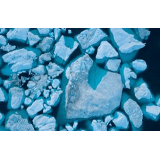
Find out, what forms may ice have and check, how melting ice influences the sea level!
Αυτή η δραστηριότητα έχει σκοπό να μετατρέψει τους μαθητές σε υπέρμαχους της Κλιματικής Αλλαγής.
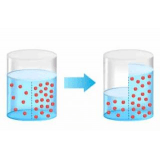
¿Se encogieron o se expandieron las tiras de papa fresca en el agua salada? En esta actividad verás cómo puedes hacer que el agua se mueva en las plantas.
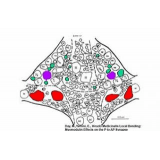
Es importante entender cómo las neuronas hacen su trabajo. Las neuronas envían mensajes electroquímicamente. Esto significa que los productos químicos provocan una señal eléctrica. Los productos químicos en el cuerpo, que se llaman iones, están "cargados eléctricamente".
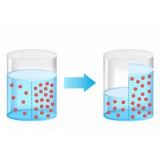
Did the fresh potato strips shrink or expand in the saltwater? In this activity you will see for yourself how you can make water move in plants.
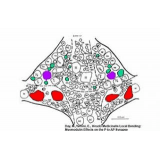
It is important to understand how neurons do what they do. Neurons send messages electrochemically. This means that chemicals cause an electrical signal. Chemicalsin the body, which are called ions are "electrically-charged".
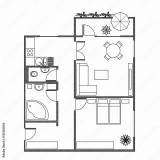
Diese neue und etwas erweiterte Version der ILS "Bauen und Wohnen" ist für den Unterricht in Physik oder Naturwissenschaften in der Jahrgangsstufe 7/8 geeignet. Sie enthält zahlreiche Aufgaben, Versuchsanleitungen, Versuchssimulationen, LearningApps und diverse Tools.