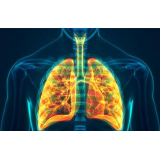
In this activity students learn about the respiratory system, its main parts and its function. They also learn about its connection ot the heart and they get to build a model using every-day materials.
Subject Domains
- Astronomical Objects And Their Characteristics
- Astronomy Related Sciences And Fields Of Study
- Effect And Phenomena
- Humans In Space
- Terms And Concepts
- Anatomy
- Botany
- Ecology
- Humans And Animals
- Life Processes
- Variation, Inheritance And Evolution
- Analytical Chemistry
- Chemical Reactions
- Inorganic Chemistry
- Organic Chemistry
- Physical Chemistry
- Aerospace Engineering
- Civil Engineering
- Electrical Engineering
- Mechanical Engineering
- Production Engineering
- Transport Engineering
- Climate
- Energy
- Environment
- Environmental Protection
- Natural Resources
- Earth Science
- Geography
- Algebra And Number Theory
- Analysis
- Applied Mathematics
- Differential And Difference Equation
- Geometry
- Logic And Foundations
- Numbers And Computation
- Statistics And Probability
- Topic From Subjects
- Electricity And Magnetism
- Energy
- Fields
- Forces And Motion
- High Energy Physics
- History Of Science And Technology
- Light
- Radioactivity
- Solids, Liquids And Gases
- Sound
- Technological Applications
- Tools For Science
- Useful Materials And Products
- Waves
- Computer Science And Technology
- Construction - Architecture
- Design
- Electricity - Electronics
- Industry
- Internet
- Mechanics
- Production
Astronomy
Biology
Chemistry
Engineering
Environmental Education
Geography And Earth Science
Mathematics
Physics
Technology
Big Ideas Of Science
- Energy Transformation
- Fundamental Forces
- Our Universe
- Structure Of Matter
- Microcosm (Quantum)
- Evolution And Biodiversity
- Organisms And Life Forms
- Planet Earth
Age Ranges
- Before 7
- 7-8
- 9-10
- 11-12
- 13-14
- 15-16
- Above 16
Languages
- Arabic
- Basque
- Bulgarian
- Catalan
- Croatian
- Czech
- Danish
- Dutch
- English
- Estonian
- Finnish
- French
- Galician
- Georgian
- German
- Greek
- Hungarian
- Indonesian
- Irish
- Italian
- Latvian
- Lithuanian
- Macedonian Slavic
- Polish
- Portuguese
- Romanian
- Russian
- Serbian
- Simplified Chinese
- Slovak
- Spanish
- Swedish
- Traditional Chinese
- Turkish
- Ukrainian
Apply
Reset
Inquiry Learning Spaces (ILSs) are personalized learning resources for students, including a lab, apps, and any other type of multimedia material. ILSs follow an inquiry cycle. Inquiry cycles can differ but the basic Go-Lab cycle consists of the phases Orientation, Conceptualisation, Investigation, Conclusion, and Discussion. The aim of an ILS is to provide students with an opportunity to conduct scientific experiments, being guided through the inquiry process and supported at each step.
This page presents ILSs created by teachers or the Go-Lab and/or Next-Lab team (and often in co-creation), on a large set of domains and in many languages. Please note that the Go-Lab Authoring Platform Graasp is no longer maintained. This means that it is not possible to create and publish new Go-Lab ILSs, preview or copy ILSs listed on this page. It is only possible to view the descriptions of ILSs, which were created and published during the lifetime of the Go-Lab projects. This page can be used for your information only. If you are interested in creating and using Inquiry Learning Spaces in your classroom, please visit the new Authoring Platform Graasp.org
If you are looking for Inquiry Learning Spaces created especially for the curricula of Benin, Kenya or Nigeria, please visit our Collections page.
11-12
Sort by
This activity aims to develop students’ understanding of concepts related to sinking and floating and specifically, it prompts them to examine which factors affect the behavior of objects in water.
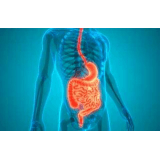
This activity is divided into two sections: In the first section, students examine which organs compose the digestive system and in the second section they investigate the function of each organ through modeling, videos and experiments.
Αυτή η δραστηριότητα χωρίζεται σε δύο ενότητες: Στην πρώτη ενότητα, οι μαθητές εξετάζουν ποια όργανα συνθέτουν το πεπτικό σύστημα και στη δεύτερη ενότητα διερευνούν τη λειτουργία κάθε οργάνου μέσω μοντελοποίησης, βίντεο και πειραμάτων.
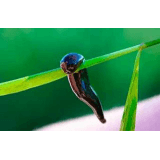
The human brain is made up of a complex network of nerve cells or neurons. Neurons control everything that our body does from the heartbeat to the emotions.
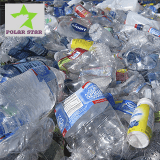
This is the Irish Language version of Plastic in the Arctic.

Viver num ambiente frio é um desafio, por isso, algumas plantas desenvolvem formas de se adaptarem ao clima do Ártico. Qual a altura das árvores nas florestas do Ártico ou quantas cores tem a tundra no Verão?
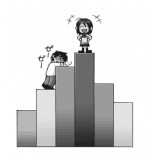
In questa attività imparerai a raccogliere ed analizzare dati partendo da situazioni reali con implementa attraverso l'uso di app, video e implementa ambienti di apprendimento, ti nel sito web Eurostat.
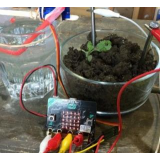
Šioje tyrimo mokymosi erdvėje sukursite laistymo sistema panaudojant BBC Micro:bit.

Привіт :) Якщо ви хочете вивчити
основні частини рослин, тоді вам сюди)