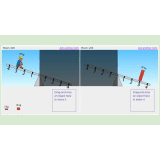
Õpilased töötavad koos, kasutades koostööl põhineva kiige tasakaalustamise simulatsiooni kahte varianti. Nad peavad kindlaks tegema, kas kiike saab tasakaalustada ettenähtud kaaludega. Ühes variandis on õpilasel kontroll kaalude paigutamise üle kiige vasakule küljele.
Subject Domains
- Astronomical Objects And Their Characteristics
- Astronomy Related Sciences And Fields Of Study
- Effect And Phenomena
- Humans In Space
- Terms And Concepts
- Anatomy
- Botany
- Ecology
- Humans And Animals
- Life Processes
- Variation, Inheritance And Evolution
- Analytical Chemistry
- Chemical Reactions
- Inorganic Chemistry
- Organic Chemistry
- Physical Chemistry
- Aerospace Engineering
- Civil Engineering
- Electrical Engineering
- Mechanical Engineering
- Production Engineering
- Transport Engineering
- Climate
- Energy
- Environment
- Environmental Protection
- Natural Resources
- Earth Science
- Geography
- Algebra And Number Theory
- Analysis
- Applied Mathematics
- Differential And Difference Equation
- Geometry
- Logic And Foundations
- Numbers And Computation
- Statistics And Probability
- Topic From Subjects
- Electricity And Magnetism
- Energy
- Fields
- Forces And Motion
- High Energy Physics
- History Of Science And Technology
- Light
- Radioactivity
- Solids, Liquids And Gases
- Sound
- Technological Applications
- Tools For Science
- Useful Materials And Products
- Waves
- Computer Science And Technology
- Construction - Architecture
- Design
- Electricity - Electronics
- Industry
- Internet
- Mechanics
- Production
Astronomy
Biology
Chemistry
Engineering
Environmental Education
Geography And Earth Science
Mathematics
Physics
Technology
Big Ideas Of Science
- Energy Transformation
- Fundamental Forces
- Our Universe
- Structure Of Matter
- Microcosm (Quantum)
- Evolution And Biodiversity
- Organisms And Life Forms
- Planet Earth
Age Ranges
- Before 7
- 7-8
- 9-10
- 11-12
- 13-14
- 15-16
- Above 16
Languages
- Arabic
- Basque
- Bulgarian
- Catalan
- Croatian
- Czech
- Danish
- Dutch
- English
- Estonian
- Finnish
- French
- Galician
- Georgian
- German
- Greek
- Hungarian
- Indonesian
- Irish
- Italian
- Latvian
- Lithuanian
- Macedonian Slavic
- Polish
- Portuguese
- Romanian
- Russian
- Serbian
- Simplified Chinese
- Slovak
- Spanish
- Swedish
- Traditional Chinese
- Turkish
- Ukrainian
Apply
Reset
Inquiry Learning Spaces (ILSs) are personalized learning resources for students, including a lab, apps, and any other type of multimedia material. ILSs follow an inquiry cycle. Inquiry cycles can differ but the basic Go-Lab cycle consists of the phases Orientation, Conceptualisation, Investigation, Conclusion, and Discussion. The aim of an ILS is to provide students with an opportunity to conduct scientific experiments, being guided through the inquiry process and supported at each step.
This page presents ILSs created by teachers or the Go-Lab and/or Next-Lab team (and often in co-creation), on a large set of domains and in many languages. Please note that the Go-Lab Authoring Platform Graasp is no longer maintained. This means that it is not possible to create and publish new Go-Lab ILSs, preview or copy ILSs listed on this page. It is only possible to view the descriptions of ILSs, which were created and published during the lifetime of the Go-Lab projects. This page can be used for your information only. If you are interested in creating and using Inquiry Learning Spaces in your classroom, please visit the new Authoring Platform Graasp.org
If you are looking for Inquiry Learning Spaces created especially for the curricula of Benin, Kenya or Nigeria, please visit our Collections page.
13-14
Sort by
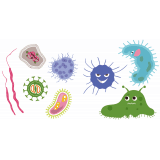
Bacteria and viruses are two different types of pathogens. Bacteria are living organisms that can exist independently and have the ability to self-grow and reproduce. In contrast, viruses are non-living pathogens that require the invasion of other living organisms to grow and reproduce.
Wciel się w rolę wynalazcy/konstruktora i zbuduj własną maszynę generującą prąd elektryczny. Odtwórz słynny XIX-wieczny eksperyment lorda Kelvina, uzyskujący elektryczność ze spadających kropel wody. Sprawdź działanie swojego urządzenia w różnych konfiguracjach i warunkach.
Take on the role of an inventor/constructor and build your own machine that generates electricity. Recreate Lord Kelvin's famous 19th century experiment where electricity was obtained from falling water droplets. Check the operation of your device in various configurations and conditions.
We all heard about the infamous smog but did you ever wonder what it is actually made of? Is it an opaque gas? A solid? Or maybe a liquid? In the experiment, we will investigate the matter by trapping some of the smog in a glass jar.
Wszyscy słyszeliśmy o smogu, ale czy zastanawialiście się kiedyś, z czego on właściwie się składa? Czy jest to nieprzejrzysty gaz? Ciało stałe? A może ciecz? W eksperymencie zbadamy tę kwestię poprzez „uwięzienie” smogu w szklanym słoiku.
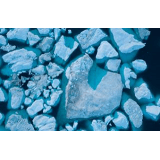
Lód może przybierać różne formy: od płatków śniegu, przez kostki lodu, po lód morski i lód lodowcowy. Uczniowie dowiedzą się, jak bardzo lód morski różni się od lodu lodowcowego i jakie są konsekwencje topnienia lodu.
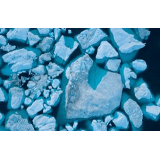
Find out, what forms may ice have and check, how melting ice influences the sea level!