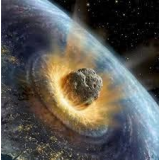
At the beginning we has a motivation film to tease the students to the subject of the impact of asteroids in earth. After that at the "Conceptualisation" tab we a concept map and a world map of the asteroids impacts. Also in this tab we had a hypothesis tool tointeract with the students.
Subject Domains
- Astronomical Objects And Their Characteristics
- Astronomy Related Sciences And Fields Of Study
- Effect And Phenomena
- Humans In Space
- Terms And Concepts
- Anatomy
- Botany
- Ecology
- Humans And Animals
- Life Processes
- Variation, Inheritance And Evolution
- Analytical Chemistry
- Chemical Reactions
- Inorganic Chemistry
- Organic Chemistry
- Physical Chemistry
- Aerospace Engineering
- Civil Engineering
- Electrical Engineering
- Mechanical Engineering
- Production Engineering
- Transport Engineering
- Climate
- Energy
- Environment
- Environmental Protection
- Natural Resources
- Earth Science
- Geography
- Algebra And Number Theory
- Analysis
- Applied Mathematics
- Differential And Difference Equation
- Geometry
- Logic And Foundations
- Numbers And Computation
- Statistics And Probability
- Topic From Subjects
- Electricity And Magnetism
- Energy
- Fields
- Forces And Motion
- High Energy Physics
- History Of Science And Technology
- Light
- Radioactivity
- Solids, Liquids And Gases
- Sound
- Technological Applications
- Tools For Science
- Useful Materials And Products
- Waves
- Computer Science And Technology
- Construction - Architecture
- Design
- Electricity - Electronics
- Industry
- Internet
- Mechanics
- Production
Astronomy
Biology
Chemistry
Engineering
Environmental Education
Geography And Earth Science
Mathematics
Physics
Technology
Big Ideas Of Science
- Energy Transformation
- Fundamental Forces
- Our Universe
- Structure Of Matter
- Microcosm (Quantum)
- Evolution And Biodiversity
- Organisms And Life Forms
- Planet Earth
Age Ranges
- Before 7
- 7-8
- 9-10
- 11-12
- 13-14
- 15-16
- Above 16
Languages
- Arabic
- Basque
- Bulgarian
- Catalan
- Croatian
- Czech
- Danish
- Dutch
- English
- Estonian
- Finnish
- French
- Galician
- Georgian
- German
- Greek
- Hungarian
- Indonesian
- Irish
- Italian
- Latvian
- Lithuanian
- Macedonian Slavic
- Polish
- Portuguese
- Romanian
- Russian
- Serbian
- Simplified Chinese
- Slovak
- Spanish
- Swedish
- Traditional Chinese
- Turkish
- Ukrainian
Apply
Reset
Inquiry Learning Spaces (ILSs) are personalized learning resources for students, including a lab, apps, and any other type of multimedia material. ILSs follow an inquiry cycle. Inquiry cycles can differ but the basic Go-Lab cycle consists of the phases Orientation, Conceptualisation, Investigation, Conclusion, and Discussion. The aim of an ILS is to provide students with an opportunity to conduct scientific experiments, being guided through the inquiry process and supported at each step.
This page presents ILSs created by teachers or the Go-Lab and/or Next-Lab team (and often in co-creation), on a large set of domains and in many languages. Please note that the Go-Lab Authoring Platform Graasp is no longer maintained. This means that it is not possible to create and publish new Go-Lab ILSs, preview or copy ILSs listed on this page. It is only possible to view the descriptions of ILSs, which were created and published during the lifetime of the Go-Lab projects. This page can be used for your information only. If you are interested in creating and using Inquiry Learning Spaces in your classroom, please visit the new Authoring Platform Graasp.org
If you are looking for Inquiry Learning Spaces created especially for the curricula of Benin, Kenya or Nigeria, please visit our Collections page.
Sort by
Deşi niciun astronaut nu a păşit încă pe Marte, oamenii de ştiinţă se pregătesc deja pentru ziua în care pământenii vor ajunge pe planeta roşie.
This ILS has been created in order to allow students to experiment with the different factors related with the use of solar energy.
Quan observem una gota d'aigua al microscopi ens podem sorprendre amb tot el que hi veiem, oi?Però com funciona la vida en aquest microcosmos?
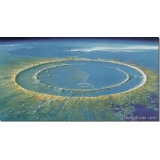
En este espacio los estudiantes usan un Simulador de impactos para investigar qué ocurre cuando un meteorito impacta contra la superficie terrestre.

Este ILS permite al alumno conocer los efectos de la acidificación en los ecosistemas marinos. El alumno comprenderá la importancia y el impacto de la acidificación en los océanos utilizando el laboratorio on line (Our acidifying ocean)
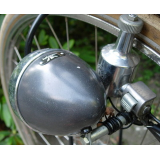
Students have to see which is the relationship between the time a capacitor is able to maintain a LED turned on and the main electrical caracteristics of the circuit (resistence, capacity and initial voltage).
In this activity, students works with a balloon powered car to better understand the science ideas of mass and force and explain what causes the balloon car to start moving, using ideas of action and reaction forces.
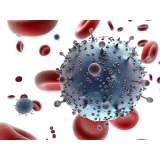
Aquest ILS permet treballar conceptes entorn al VIH/Sida, així com aspectes ètics, legals i socio-econòmics que giren entorn a aquesta temàtica.
En este espacio vamos a trabajar el tema de las reglas de solubilidad siguiendo el método de aprendizaje por indagación. Para ello, los estudiantes han de recorrer, por orden, las siguientes fases realizando las actividades que se proponen en cada una de ellas.